Blockchain technology is transforming the way real-world assets are owned, managed, and traded. From real estate and investment funds to commodities and fine art, blockchain-powered asset tokenization is creating new opportunities for businesses and investors by enabling fractional ownership, improving transparency, and increasing liquidity.
As the adoption of digital assets continues to accelerate, real-world asset (RWA) tokenization is emerging as one of the fastest-growing applications of blockchain. The global tokenization market is projected to grow from USD 5.76 billion in 2022 to USD 20.63 billion by 2030, at a compound annual growth rate (CAGR) of 20%, highlighting the increasing demand for secure, efficient, and accessible digital asset solutions.
In this guide, we’ll explore how blockchain enables fractional real-world asset tokenization, how the process works, its key benefits, common token standards, real-world use cases, and what businesses should consider when building a compliant and scalable tokenization platform.
Brief Overview of Blockchain Technology
Blockchain technology, at its core, is a decentralized digital ledger that records transactions across multiple computers in a transparent and immutable manner. Utilising cryptographic techniques, each block of data is linked to the previous one, forming a secure chain. This distributed nature eliminates the need for intermediaries, reduces the risk of fraud, and enhances trust among participants.
What is Fractional Real-World Asset Tokenization?
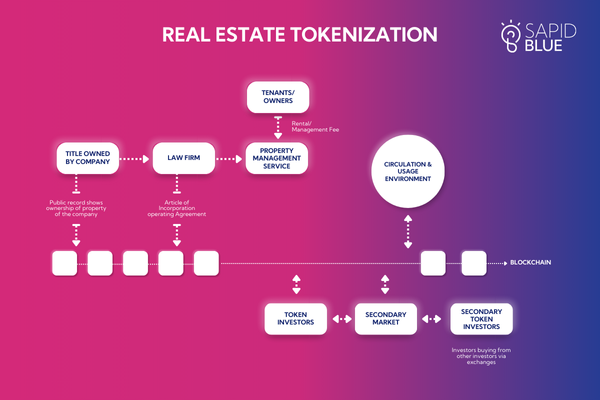
Fractional real-world asset tokenization is the process of representing ownership of tangible assets, such as real estate, art, or commodities, as digital tokens on a blockchain. Reports say that Real-world asset tokenization is projected to be a 16 trillion dollar industry (~10% of global GDP) by 2030 By breaking down these assets into smaller, divisible units, investors can purchase fractional ownership, thereby reducing the barrier to entry and enabling broader participation in traditionally illiquid markets.
Fractional Real-World Asset Tokenization
Why Blockchain Matters for Fractional Asset Tokenization?
Blockchain plays a major role in fractional real-world asset tokenization by providing several key advantages:
Transparency and Immutability: The transparent nature of blockchain ensures that all transactions are recorded and visible to all participants, fostering trust and reducing the risk of manipulation or fraud.
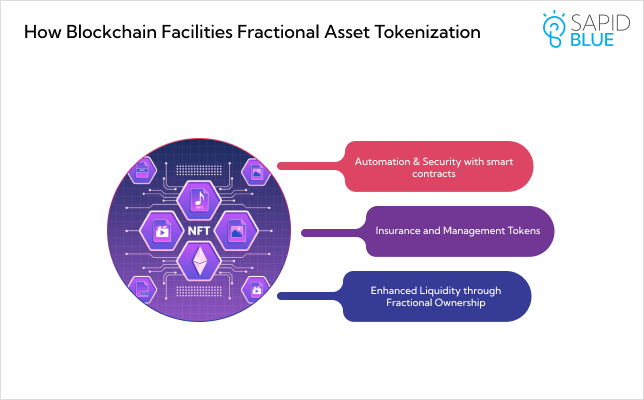
Increased Liquidity: By tokenizing real-world assets, blockchain facilitates fractional ownership and enables assets to be traded seamlessly on digital exchanges, unlocking liquidity and enabling investors to buy and sell their shares with ease.
Accessibility and Inclusivity: Fractional tokenization democratises access to investment opportunities by allowing individuals to invest in high-value assets with lower capital requirements. This inclusivity broadens the investor base and promotes financial inclusion.
Efficiency and Cost-Effectiveness: Through smart contracts, blockchain automates the execution of agreements, streamlining the process of asset tokenization, transfer, and settlement. This automation reduces administrative costs and eliminates the need for intermediaries, making transactions faster and more cost-effective.
How Blockchain Facilitates Fractional Asset Tokenization
How Blockchain Tokenization Actually Works? (Step by Step)
Tokenizing a real-world asset involves several key steps that convert a physical or financial asset into a secure digital token on a blockchain.
Select and value the asset: Identify the asset- such as real estate, artwork, commodities, or investment funds- and determine its market value.
Establish the legal structure: Create a legal framework that links the digital tokens to the underlying asset and defines ownership rights.
Choose the blockchain and token standard: Select the blockchain network and token standard based on the asset type, scalability, security, and regulatory requirements.
Create smart contracts and mint tokens: Develop smart contracts that define the ownership rules and issue digital tokens representing the asset.
Verify investors: Complete Know Your Customer (KYC) and Anti-Money Laundering (AML) checks before allowing investors to participate.
Launch the tokens: List the tokens on a compliant marketplace or trading platform, enabling investors to buy, sell, or transfer ownership.
Manage the asset digitally: Use smart contracts to automate activities such as distributing returns, managing ownership records, and processing future transactions.
Common Token Standards for Real-World Asset (RWA) Tokenization
The token standard you choose determines how digital assets are created, managed, transferred, and regulated. Selecting the right standard depends on the type of asset and its compliance requirements.
ERC-20: The most widely used standard for fungible tokens. It is ideal for assets that can be divided into equal units but offers limited built-in compliance features.
ERC-721 and ERC-1155: These standards are commonly used for unique or semi-fungible assets, such as digital collectibles, artwork, and tokenized physical assets with distinct ownership.
ERC-1400: A security token standard designed for regulated assets. It includes features that support compliance, ownership restrictions, and regulatory requirements.
ERC-3643 (T-REX Protocol): One of the leading standards for enterprise and institutional RWA tokenization. It integrates identity verification, KYC/AML compliance, and transfer restrictions directly into smart contracts, making it well suited for tokenizing regulated assets such as real estate, private equity, and investment funds.
For businesses developing regulated tokenized assets, standards like ERC-3643 provide stronger security, compliance, and governance, making them a preferred choice for modern RWA tokenization platforms.
Benefits of Blockchain in Asset Tokenization
Blockchain technology makes asset tokenization more secure, transparent, and efficient by simplifying how assets are owned, managed, and traded.
a) Accessibility
Blockchain technology has significantly lowered the barrier to entry for investors by enabling fractional ownership of real-world assets. Previously, high investment requirements often restricted access to lucrative asset classes. Now, with tokenization, individuals can invest in fractions of assets, allowing even small investors to participate in lucrative markets such as real estate or fine art. This democratization of asset ownership fosters financial inclusion and widens investment opportunities for a broader spectrum of individuals.
b) Transparency
Decentralization is a core concept in blockchain technology, eliminating the need for intermediaries in transaction verification. Instead, a network of computers, or nodes, collectively validates transactions, ensuring transparency as the blockchain is open for everyone to see. This decentralized approach reduces reliance on a central authority, which often leads to single points of failure, potential data manipulation, and a lack of transparency. One of the most profound benefits of blockchain in asset tokenization is its inherent transparency. Every transaction, from the initial tokenization of assets to subsequent transfers, is recorded on the blockchain, creating an immutable and transparent ledger. Public blockchains use consensus mechanisms for transaction validation, allowing all participants to verify their authenticity. This enhances trust and transparency, making blockchain particularly valuable for applications where impartiality and openness are critical, such as financial transactions and distributing benefits. The visibility provided by blockchain technology mitigates the risk of fraudulent activities and enhances the credibility of the tokenized assets, building trust among investors and asset holders as they can verify ownership, track the asset’s history, and ensure compliance with regulations.
c) Efficiency
Blockchain streamlines the entire process of buying, selling, and managing tokenized assets, making it more efficient than traditional methods. Smart contracts automate transactions, eliminating the need for intermediaries and reducing associated costs and delays. Additionally, blockchain-based platforms provide real-time updates on asset performance and ownership changes, facilitating seamless asset management. By cutting through bureaucratic red tape and optimising processes, blockchain enhances operational efficiency across the asset tokenization lifecycle.
d) Security
The security features inherent in blockchain technology offer unparalleled protection of ownership rights and data integrity. Through cryptographic techniques and decentralised consensus mechanisms, blockchain creates immutable records of asset ownership and transactions. This transparency and immutability significantly reduce the risk of fraud, forgery, or tampering. Consequently, investors can trust that their ownership rights are safeguarded, and asset transactions are conducted in a secure and verifiable manner, enhancing overall confidence in the tokenized asset ecosystem.
e) Liquidity
Blockchain-enabled asset tokenization unlocks new levels of liquidity by facilitating faster and easier trading of fractional assets. Unlike traditional illiquid assets, such as real estate or private equity, tokenized assets can be traded on digital exchanges 24/7, enabling investors to buy and sell fractions of assets with ease. This enhanced liquidity not only provides investors with more flexibility in managing their portfolios but also creates a more dynamic market environment, where assets can be quickly monetized and capital efficiently deployed. Ultimately, improved liquidity enhances market efficiency and increases the attractiveness of asset tokenization as an investment vehicle.
Greater Accessibility: Fractional ownership allows investors to purchase smaller shares of high-value assets such as real estate, artwork, and private investment funds, making these opportunities available to a broader audience.
Enhanced Transparency: Every transaction is securely recorded on the blockchain, creating a transparent and immutable record of ownership and asset transfers.
Improved Efficiency: Smart contracts automate processes such as transactions, ownership transfers, and revenue distribution, reducing manual work and speeding up settlements.
Stronger Security: Blockchain uses advanced cryptography and decentralized validation to protect asset records from unauthorized changes and fraud.
Higher Liquidity: Tokenized assets can be traded more easily on digital marketplaces, enabling investors to buy and sell their holdings faster than in traditional markets.
How to Choose the Right Asset Tokenization Development Partner?
Selecting the right development partner is essential for building a secure, compliant, and scalable asset tokenization platform. Look for a team that can support your project from strategy through deployment and beyond.
Consider a partner with:
Blockchain expertise: Proven experience in blockchain development, smart contracts, and asset tokenization solutions.
Regulatory knowledge: Experience implementing compliant token standards and integrating KYC/AML and other regulatory requirements.
Industry experience: A strong understanding of legal frameworks, digital asset ownership, and real-world asset tokenization.
End-to-end development services: The ability to deliver everything from platform design and token creation to marketplace integration, security, testing, and ongoing support.
Choosing an experienced technology partner helps reduce risk, accelerate development, and ensure your tokenization platform is built for long-term growth.
Real-World Use Cases of Blockchain Tokenization
Asset tokenization is already transforming multiple industries by making high-value assets more accessible, transparent, and easier to trade.
Real Estate
Tokenization enables investors to purchase fractional ownership of commercial and residential properties, reducing investment barriers, improving liquidity, and simplifying property transactions.
Art and Collectibles
High-value artwork and collectibles can be divided into digital shares, allowing multiple investors to own a portion of an asset. This expands investment opportunities while improving transparency and ownership tracking.
Commodities
Assets such as gold and other precious metals can be tokenized, allowing investors to buy, sell, and trade fractional ownership without physically holding the underlying asset.
Investment Funds and Private Equity
Tokenization allows investment funds and private equity assets to be divided into digital tokens, making it easier for investors to access diversified portfolios while improving transaction efficiency and transparency.
FAQ’s
1. Which assets can be tokenized using blockchain?
A wide range of real-world assets can be tokenized, including real estate, commodities, fine art, private equity, investment funds, intellectual property, luxury goods, carbon credits, and infrastructure projects. Any asset with clearly defined ownership rights can potentially be represented as digital tokens on a blockchain.
2. Is real-world asset (RWA) tokenization legally recognized?
Yes, asset tokenization is legally recognized in many jurisdictions, but regulations vary by country. Businesses must comply with local securities laws, KYC/AML requirements, tax regulations, and digital asset frameworks before issuing or trading tokenized assets.
3. What is the difference between asset tokenization and securitization?
Traditional securitization pools financial assets into investment products through intermediaries. Asset tokenization uses blockchain technology to create digital ownership tokens, enabling faster transactions, greater transparency, fractional ownership, and more efficient asset management.
4. How long does it take to develop an asset tokenization platform?
The development timeline depends on the platform’s complexity, regulatory requirements, blockchain network, smart contract functionality, and third-party integrations. A basic MVP may take a few months, while enterprise-grade tokenization platforms typically require additional time for compliance, security testing, and deployment.
5. Why are businesses investing in real-world asset tokenization?
Businesses are adopting asset tokenization to unlock liquidity, attract a broader investor base, improve operational efficiency, reduce transaction costs, and create new investment opportunities. As blockchain adoption continues to grow, tokenization is becoming an important part of modern digital asset strategies.